
Roof Repair vs Replacement Houston: How to Tell Which One You Need

One of the most common questions homeowners ask us is simple: "Do I need a whole new roof, or can this just be patched?" It's a fair question — a repair might run a few hundred dollars, while a full replacement is a much bigger investment. Here's how we actually make that call on real jobs. For homeowners weighing roof repair vs replacement in Houston, the decision usually comes down to a handful of key factors.
Start with the roof's age. Nationally, asphalt shingle roofs are often quoted as lasting 20–25 years, but that number assumes moderate climates. Here in the Houston area, the heat shortens that significantly — if there's been no storm damage, we typically see shingles start showing real wear closer to the 18–22 year mark, simply from years of intense attic heat baking them from underneath. If your roof is younger than that window and the damage is limited to one area, repair is usually the right move. If it's already in or past that range, even minor visible damage is often a sign the whole system is wearing out at once, and a repair at that point is just delaying the inevitable.
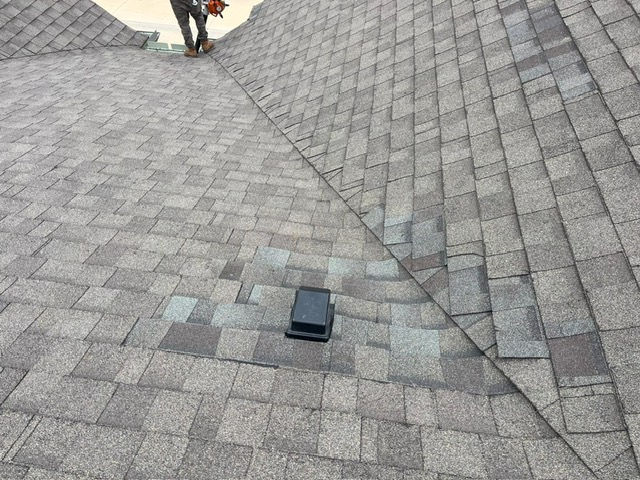
Check your attic ventilation. This is one homeowners rarely think about, but it plays a bigger role than most people realize. Poor attic ventilation traps heat and moisture underneath the roof deck, which cooks the shingles from below regardless of how new or undamaged they look from the ground. A roof with weak ventilation can wear out years ahead of schedule, while a well-ventilated roof of the same age often holds up noticeably better. If your attic runs hot or feels stuffy, or you've never had ventilation checked, it's worth having it evaluated alongside any repair-vs-replace decision — sometimes improving ventilation is what actually extends the life of a roof that still has some good years left.
Look at how widespread the damage actually is. A handful of shingles blown loose in a storm, or one soft spot from a slow leak, is a textbook repair. But if you're seeing curling, cracking, or missing shingles spread across multiple sections of the roof, that's a different story — it usually means the whole roofing system is aging out together, not just the one area that happens to be visible from the ground.
Pay attention to granule loss. Check your gutters after it rains — if they're collecting a noticeable amount of gritty, sand-like granules, your shingles are losing the protective layer that shields them from UV damage. A little granule loss is normal wear. Heavy, consistent loss across the roof is a sign the shingles are past their effective lifespan.
Watch for leaks in more than one spot. A single, isolated leak is usually fixable. Leaks showing up in multiple rooms, or the same spot leaking again after it's already been repaired, is a sign the underlying problem is bigger than the patch can solve.
Don't ignore sagging. Any dip or unevenness in the roofline isn't a shingle problem — it's a structural one, and it needs a professional look right away regardless of how the rest of the roof looks.
Here's the rule of thumb we use: if a repair would cost less than 10–15% of what a full replacement would run, and the roof is well under that 18–22 year mark with decent attic ventilation, repair is usually the smarter call. If the roof's already in that range, ventilation is poor, repairs are becoming a recurring conversation, or the damage is structural, replacement almost always protects your home better — and costs less over time than paying for the same repair twice.
Having spent years as a licensed independent adjuster before starting Best Buddy Roofing, I've seen this decision made both ways — sometimes homeowners replace a roof that only needed a repair, and sometimes a "quick patch" gets put off until it turns into a much bigger, much more expensive problem. If you're not sure which side of that line your roof is on, we're happy to take a look and give you a straight answer either way — not just the answer that leads to the bigger job.


Comments